
Study of Immune Deficiency Diseases in Paediatrics (GEMDIP)
Research Program
Where we are
 SJD Barcelona Children's Hospital
Related websites
 SJD Barcelona Children's Hospital
 GEMDIP investigates paediatric diseases caused by dysfunction of the immune system, spanning immune-mediated inflammatory and autoinflammatory diseases, inborn errors of immunity and immune dysregulation, and advanced therapies for severe immune disorders. The group integrates deeply characterised clinical cohorts, genomics and functional immunology, longitudinal immunomonitoring, clinical trials and ATMP development to move from patient phenotyping and mechanistic discovery to precision diagnosis and treatment. GEMDIP is recognised by AGAUR as a consolidated research group (GRC2021/SGR01250).
Research lines
- Immune-mediated inflammatory diseases and autoinflammation. Lead: Dr Jordi Antón.
This line investigates the mechanisms and clinical heterogeneity of paediatric rheumatic, autoimmune and autoinflammatory diseases, including juvenile idiopathic arthritis, juvenile dermatomyositis, systemic lupus erythematosus, vasculitis, Kawasaki disease and monogenic or multifactorial autoinflammatory syndromes.
- Immune ontogeny, inborn errors of immunity and immune dysregulation. Lead: Dr Laia Alsina.
The central question of this line is how the human immune system develops from fetal and neonatal life through childhood, establishes effective immune defence and tolerance, and how these trajectories deviate because of genetic disease, inflammation or therapeutic and environmental exposures.
- Advanced therapies and gene-therapy translation for severe immune disorders. Lead: Dr Alessandra Magnani.
This line develops and translates cell and gene therapies for severe inborn errors of immunity and immune dysregulation. It bridges preclinical development and clinical implementation through vector and cell-product design, GMP manufacturing, quality control, batch-release strategies, regulatory readiness and early-phase clinical translation.
Scientific objectives
- To define clinically relevant molecular and immunological endotypes across paediatric immune-mediated inflammatory diseases, autoinflammation, inborn errors of immunity and immune dysregulation.
- To map age-dependent immune ontogeny and the establishment of tolerance, and to determine how these processes are altered by genetic disease, inflammation, maternal conditions, treatments and environmental exposures.
- To accelerate precision diagnosis through the integration of genomics, functional immunology and validated cellular, transcriptomic and epigenetic biomarkers.
- To generate prospective clinical evidence and harmonised immunomonitoring strategies that optimise the use of biologics, pathway-targeted drugs, immunoglobulin replacement and other precision therapies.
- To develop GMP-compatible cell and gene-therapy programmes and translate advanced therapies safely and equitably into paediatric clinical care.
Area/Field of expertise
GEMDIP is a multidisciplinary clinical-translational group focused on the clinical, immunological, molecular and therapeutic dimensions of paediatric immune dysfunction. Its expertise spans paediatric rheumatology, clinical immunology, functional immunology, biomarker development, immune monitoring, clinical trials, and cell and gene therapy.
The group brings together physicians, immunologists, biologists, laboratory scientists and advanced-therapy specialists in a shared bedside-to-GMP pathway. Cohorts and registries are linked to genomic discovery, functional validation and age-adapted immune interpretation, and then translated into biomarkers, prospective studies, targeted therapies and advanced-therapy programmes. The model is reinforced through collaboration with the Immunology Department of Hospital Clínic Barcelona and networks including ERN-RITA, ERN-ReCONNET, ESID, EAACI, PReS, PReSTaR, PRINTO and CERTERA.
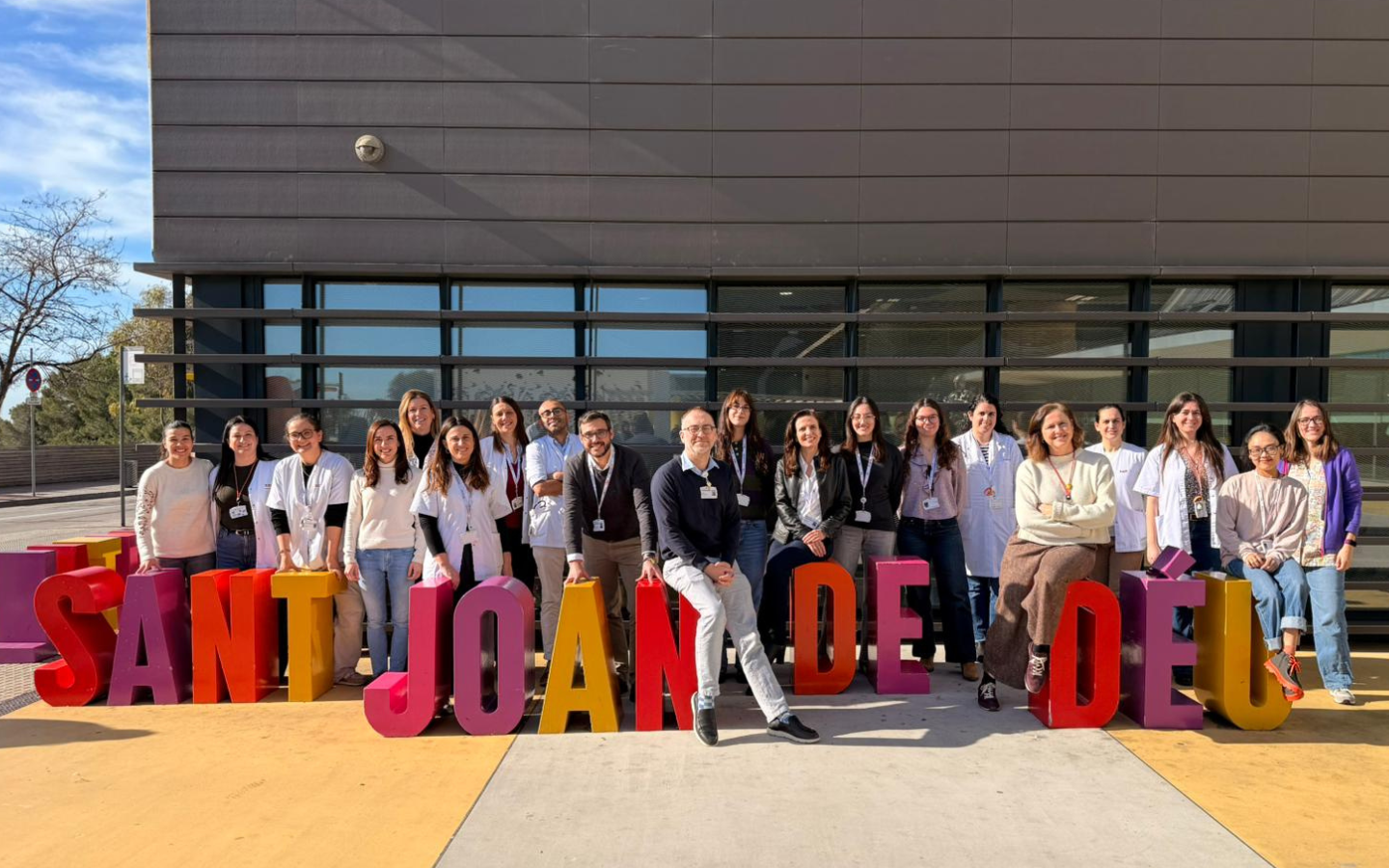
Group members
-

Jefe de Grupo Senior
-

Jefe de Grupo
-

Investigador post-doc
-

Investigador
-

Investigador
-

Investigador
-

Investigador
-

Investigador
-

Investigador post-doc
-
Investigador pre-doc
-
Investigador pre-doc
-
Investigador
-
Ayudante de investigación
-

Investigador
-

Investigador post-doc
-

Investigador
-
Investigador post-doc
-
Investigador pre-doc
Last Publications
- Foeldvari I, Solebo A, Angeles-Han ST, Brost AG, de Boer J, Días-Cascajosa J, Glerup M, Ingels H, Klotsche J, Koopman-Kalinina Ayuso V, Maccora I, Mata S, Nordal E, Ruperto N, Simonini G, Swart JF, Titz J, van Meerwij CLLI and Anton-Lopez J What is the best way to plan a 12-month clinical drug trial in JIA associated uveitis? Expert Review of Clinical Immunology . 22(3): 323-336.
- Tachó-Piñot R, Bashour H, Filipska M, Corral-Vazquez C, Guzman M, Marcos-Fa X, Martinuzzi D, Honner H, Canales Herrerias P, Tejedor Vaquero S, Sáez Gordón A, Perera-Bel J, Domínguez Barragán J, Arcos-Ribas B, de Campos-Mata L, Slabodkin A, Chernigovskaya M, Rodríguez de la Concepción ML, Gutierrez-Marcos J, García-García AP, Nascimento-Osorio A, Pascal M, Yagüe-Ribes J, Juan-Otero M, Arostegui-Gorospe JI, Hijano Esqué R, Sánchez Font A, Ehl S, Grimbacher B, Rizzi M, Dotta L, Chen K, Badolato R, Alsina L, Mehandru S, Cunningham-Rundles C, Carrillo J, Magri G, Greiff V and Cerutti A IgD from atypical-like memory B cells and plasma cells targets commensal and environmental antigens. JOURNAL OF EXPERIMENTAL MEDICINE . 223(5): .
- Galán CG, Díaz VF, Cols M, Saura L, Ruiz-Hernández CJ, Iglesias-Jimenez E, Freites MJ, Polanco BM, Niño JAM and Spera AM Asthma or not asthma? That is the question. ALLERGOLOGIA ET IMMUNOPATHOLOGIA . 54(3): 193-197.
Projects
- Project name:
- Identificación de un panel de biomarcadores en sangre periférica asociados al desarrollo de calcinosis en pacientes con dermatomiositis juvenil
- Leader
- Estibaliz Iglesias Jimenez
- Funding entities:
- Sociedad Española de Reumatología Pediátrica (SERPE)
- Code
- PCP00469
- Starting - finishing date:
- 2025 - 2027
- Project name:
- Valor del estudio transcriptómico mediante firma de interferón tipo 1 como biomarcador de actividad renal en pacientes pediátricos con nefritis lúpica
- Leader
- Joan Calzada Hernández
- Funding entities:
- Sociedad Española de Reumatología Pediátrica (SERPE)
- Code
- PCP00468
- Starting - finishing date:
- 2025 - 2027
- Project name:
- Desarrollo de una nueva terapia génica para curar la deficiencia de CMH de clase II
- Leader
- Alessandra Magnani
- Funding entities:
- Instituto de Salud Carlos III (ISCIII)
- Code
- PI24/00424
- Starting - finishing date:
- 2025 - 2027
Theses
-
Caracterización de las alteraciones inmunológicas, específicamente en células Treg, implicadas en la desregulación inmune en pacientes pediátricos con errores innatos de inmunidad, hacia terapias dirigidas
- Author
- Acevedo Gómez, Daniel
- Institution
- UNIVERSIDAD AUTÓNOMA DE BARCELONA
-
Caracterización epidemiológica, clínica e inmunológica del síndrome inflamatorio multisistémico pediátrico asociado a la infección por SAR-CoV-2
- Author
- Pino Ramirez, Rosa María
- Institution
- UNIVERSIDAD DE BARCELONA
-
Immune system profile of newborns born to mothers treated with anti-TNF-a through pregnancy.
- Author
- Luo, Yiyi
- Institution
- UNIVERSIDAD DE BARCELONA
News
-
Sant Joan de Déu, the first Spanish hospital to produce advanced therapies for public and private institutions in Europe
The Advanced Therapies Platform of Sant Joan de Déu has received MIA accreditation, which allows the center to operate with the status of a pharmaceutical laboratory, producing and exporting advanced therapies to other centers and institutions.
-
Mutation in DOCK11 gene explains rare disorder in immune system regulation
Researchers from the Institut de Recerca Sant Joan de Déu - SJD Barcelona Children's Hospital participate in an international study, published in the prestigious scientific journal New England Journal of Medicine, which describes for the first time a new disease of the immune system caused by a mutation of the DOCK11 gene.
-
Researchers discover a key factor that predicts COVID-19 disease severity
A study led by Drs. Laia Alsina and Iolanda Jordan from the IRSJD evidences a key factor that predicts the severity of COVID-19: an alteration of the first immune response to SARS-CoV-2 infection, in key molecules in the anti-infective response. The study has been published in open access in the journal iScience.
More activities
-
Defensa tesi doctoral: Rosa Maria Pino Ramirez
Auditori Plaza · Hospital Sant Joan de Déu
-
Defensa tesi doctoral: Yiyi Luo
Aula 14 (Facultat Medicina · UB) and online
-
Defensa tesi doctoral: Ana Pilar García García
Auditori Plaza, Hospital Sant Joan de Déu · Online
