
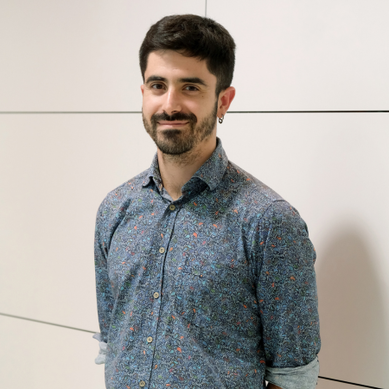
Óscar Soto Angona
Investigador pre-doc
Óscar Soto Angona is a psychiatrist and principal investigator of ANIMA (Advanced New Interventions for the Mind and Awareness), the IRSJD group he founded to study the clinical and therapeutic use of altered states of consciousness and develop new treatments in mental health. He combines research with clinical practice as an attending psychiatrist in the Servicio de Rehabilitación Psiquiátrica Intensiva (SERPI) at Hospital de Numància, part of Parc Sanitari Sant Joan de Déu. In his clinical and research practice, he advocates a humanistic, integrative and evidence-based approach that promotes dialogue between psychiatry, neuroscience and philosophy of mind.
His research focuses on the psychological mechanisms of change underlying the therapeutic effects of altered states of consciousness and on the neurobiological correlates of subjective experience, with particular attention to neurophenomenology. His work aims to develop more effective, personalised and person-centred treatments based on a deeper understanding of the mind and consciousness. He has participated in several clinical trials involving novel therapies for treatment-resistant disorders-including psilocybin-, ayahuasca-, 5-MeO-DMT- and esketamine-assisted treatments-and is the author of numerous publications in high-impact scientific journals. He has received awards and grants, including the Carles Margarit grant from Vall d'Hebron Institut de Recerca (VHIR), a Río Hortega contract from Instituto de Salud Carlos III, and the Francisco J. Varela Award from Mind & Life Europe. He has also obtained competitive funding as principal investigator for national and European projects.
He graduated in Medicine from Universidad de Valladolid (2016), completed his specialist training in Psychiatry at Hospital Universitario Vall d'Hebron (2021), and obtained his PhD in Psychiatry from Universitat Autònoma de Barcelona (2026) with the thesis Changing to Heal: An Empirical Study on Meaning-Making and Psychological Flexibility as Mechanisms of Change in Psychedelic-Assisted Therapy. He also holds a Master's degree in Theoretical and Practical Philosophy from UNED. He has extensive experience in the treatment of treatment-resistant disorders and in psychedelic-assisted psychotherapy, with specialised training at internationally recognised centres: MIND Foundation (postgraduate training in augmented psychotherapy), MAPS (MDMA-assisted therapy), COMPASS Pathways (psilocybin-assisted therapy) and Beckley/Fluence (5-MeO-DMT-assisted therapy).
He is a visiting lecturer on national and international master's degrees and postgraduate programmes on psychedelic-assisted psychotherapy and altered states of consciousness, and has contributed to science communication features in mainstream media such as TV3 and TVE.
He is the founder and vice-president of the Sociedad Española de Medicina Psicodélica (SEMPsi), which he chaired from 2022 to 2025; a founding member of the Psychedelics Working Group of the Societat Catalana de Psiquiatria i Salut Mental; and a member of the Psychedelic Research Network of the Sociedad Europea de Neuropsicofarmacología (ECNP).
Committed to the rigorous, safe and evidence-based implementation of psychedelic-assisted therapies, he has participated as an expert in meetings at the Congreso de los Diputados and with the Comisionado de Salud Mental del Ministerio de Sanidad.
Professional network profiles
Last Publications
- Madero S, Soto-Angona O, Ona G, Sanchez-Moreno J and Vieta E Current perspectives on psychedelic treatments in Europe. LANCET REGIONAL HEALTH-EUROPE . 61: 101537-101537.
More activities
-
Defensa tesi doctoral: Óscar Soto
Aula 105, Campus UAB · Vall d'Hebron
